
The Most Important Places to Clean First for Safety and Smooth Daily Service
The areas that should be cleaned first in restaurant cleaning are food prep surfaces, cooking equipment, floors, restrooms, and high-touch spots like handles and switches. These areas affect food safety, health code results, and the guest experience right away. If a team starts with the highest-risk zones first, it helps stop grease buildup, cross contamination, odors, and slips before they turn into bigger problems.
Quick Answer
Not every part of a restaurant carries the same risk. In most cases, the kitchen and prep line should come first. These areas touch food all day. After that, focus on equipment, floors, drains, dining areas, and restrooms. A smart restaurant cleaning plan gives extra attention to spots that collect grease, moisture, crumbs, and hand contact. Even if the space looks clean, hidden buildup can still cause trouble.
What You Need Before Starting
Before cleaning begins, it helps to gather the right tools and set a clear order. This saves time and helps staff avoid missing key areas. It also helps if each zone has its own cleaning cloths or tools, so germs do not spread from one place to another. If your team handles commercial cleaning in-house, keeping supplies labeled by area can make the process easier.
- Food-safe cleaner for prep surfaces
- Degreaser for cooking equipment and nearby walls
- Mop, broom, and floor cleaner
- Brushes for grout, drains, and corners
- Trash bags and gloves
- Microfiber cloths for high-touch points
- A checklist by area and shift
Step-by-Step Process
A simple order helps teams clean faster and better. Start with the areas that carry the biggest safety risk. Then move to areas that affect comfort and appearance.
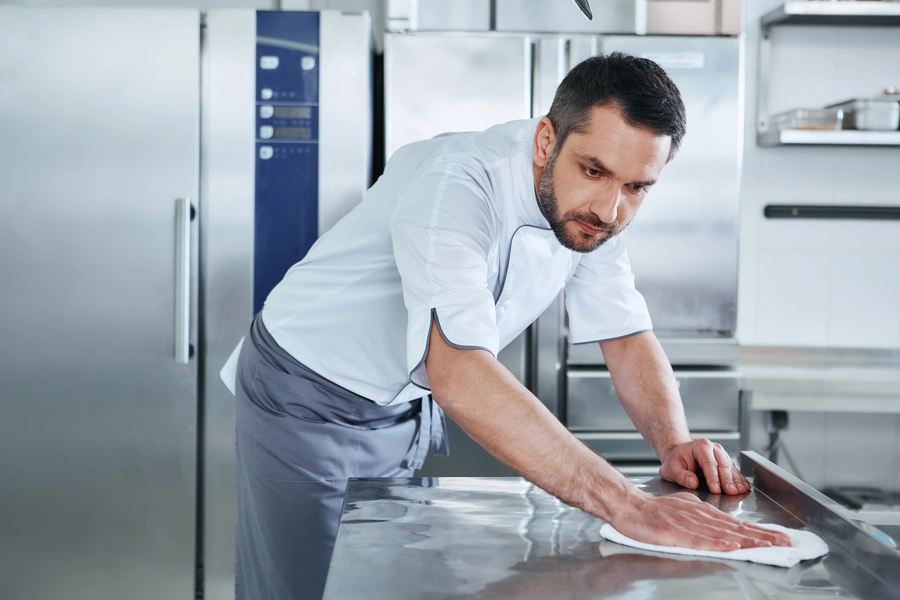
- Clean and sanitize food prep counters, cutting boards, and tables.
- Wipe down slicers, mixers, grills, fryers, and prep tools.
- Remove grease from hoods, backsplashes, and nearby walls.
- Sweep and mop kitchen floors, paying close attention to corners.
- Clean drains, floor mats, and spots under equipment.
- Disinfect handles, switches, touch screens, and cooler doors.
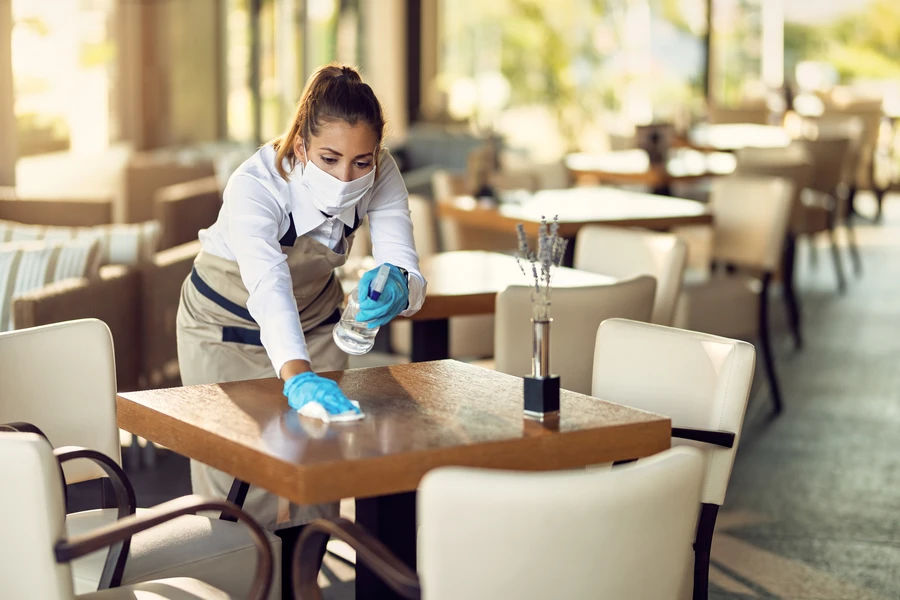
- Wipe dining tables, chairs, booths, and condiment stations.
- Clean restrooms from top to bottom and restock supplies.
- Take out trash and clean the cans inside and out.
- Finish with the entrance and other first-impression areas.
Which Areas Need the Most Attention
Some parts of a restaurant need more cleaning than others because they get dirty faster or create bigger health risks. Prep stations should always stay near the top of the list because they come into direct contact with food. Cooking lines also need close watch because grease spreads fast and can become a fire risk. Floors matter too, especially around fryers, dish stations, and walk-ins, where spills are common.
Restrooms should also stay high on the list. Guests may judge the whole business by the restroom. A clean dining room matters, but a sticky restroom floor or empty soap dispenser can leave a bad impression. High-touch points are another area that people often miss. Door pulls, touch screens, light switches, and freezer handles may not look dirty, but they can hold a lot of germs.
Common Mistakes to Avoid
Many cleaning problems come from putting too much focus on what guests can see and not enough on what staff use every hour. A shiny front counter does not help much if the prep sink, drain, or cooler gasket is dirty. Another common mistake is cleaning in the wrong order. If a team mops first and then scrubs equipment, the floor gets dirty again right away.
- Skipping under equipment and behind appliances
- Using one cloth in too many areas
- Forgetting handles, buttons, and touch pads
- Cleaning only at closing and not during shifts
- Ignoring drains until odors start
- Using the wrong cleaner on food-contact surfaces
When to Call a Professional
Daily and weekly tasks can often be handled by staff, but some jobs need a trained crew. Heavy grease removal, deep kitchen detailing, tile and grout cleaning, and hard-to-reach buildup can take more time, stronger tools, and better safety steps. If your restaurant has repeat odor issues, slippery floors, pest signs, or grease in places staff cannot fully reach, it may be time for outside help.
A professional team can also help before inspections, after remodel work, or during seasonal slow periods. This kind of service can reset the space and make regular upkeep easier for your staff. It is also useful when a restaurant has late hours, high customer traffic, or not enough time for a full deep clean between shifts.
Final Recommendation
For the best results, build your restaurant cleaning plan around risk, not just appearance. Put food prep spaces first, then cooking equipment, floors, drains, restrooms, and high-touch points. Use a written checklist and break tasks into daily, weekly, and monthly jobs. That makes it easier to keep the restaurant safer, cleaner, and more pleasant for guests and staff.
Get Help With the Hard-to-Reach Areas
If you need help keeping your space clean in Lancaster, PA, we can help map out the areas that need the most attention. Kingdom Kleaning & Maintenance LLC works with restaurants that want a cleaner kitchen, dining room, and restroom routine. Call us at (928) 239-5464 to talk about a cleaning plan that fits your schedule.